
Yoga in Tulum: A Different Way to Experience Tulum

Tulum is known for its Caribbean beaches, cenotes, Mayan history and jungle landscapes. But there is another side to the destination that has become just as much a part of its identity: wellness.

Yoga studios, meditation, breathwork and holistic experiences have been part of Tulum for years, attracting travelers looking for more than a traditional beach vacation. Here, practicing yoga doesn’t necessarily mean building your entire trip around wellness. It can be an early morning class before heading to the beach, a quiet afternoon practice after exploring a cenote, or simply an opportunity to slow down for a few hours.

And for those who want to go further, Tulum is also one of the most natural places in Mexico to turn a few yoga classes into a complete wellness experience.
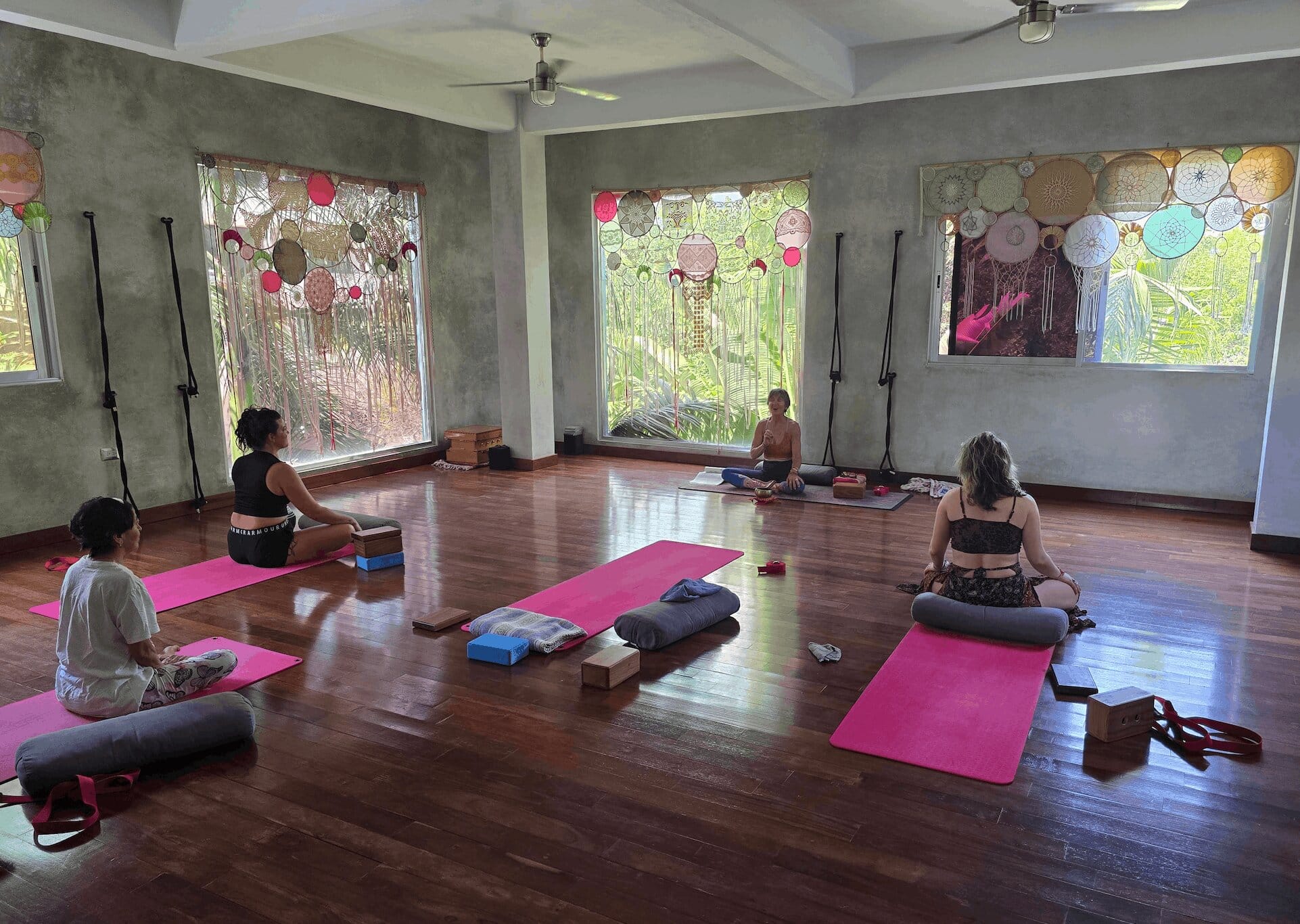
Why Yoga Feels Different in Tulum

Part of the answer is simply the setting.

Tulum sits between the Caribbean Sea and the tropical landscapes of the Yucatán Peninsula. Cenotes and underground rivers surround the town, while the nearby Sian Ka’an Biosphere Reserve protects more than half a million hectares of terrestrial and marine ecosystems and has been recognized as a UNESCO World Heritage Site since 1987.

It’s easy to understand why wellness has found a home here.

Yoga in Tulum can take many forms. You’ll find Vinyasa and Ashtanga alongside Yin yoga, meditation, mobility and other movement practices. Some travelers practice every day; others simply incorporate one or two sessions into their vacation.

The point isn’t necessarily to become a yogi while you’re here. It’s about experiencing Tulum at a different pace.

For more inspiration, explore some of the wellness experiences and things to do in Tulum.

More Than a Morning Yoga Class

One of the best things about wellness in Tulum is that it doesn’t have to stop when you leave the studio.

A morning practice can be followed by breakfast and a swim in the Caribbean. Another day might mean yoga followed by an afternoon discovering one of the freshwater cenotes hidden around Tulum.

If you’ve never experienced one, our guide to Gran Cenote in Tulum is a good place to start.

There are also opportunities for massage, meditation and other wellness experiences throughout the destination. Through our Vacation in Tulum concierge, guests can arrange experiences ranging from yoga and massage to cenote healing, lagoon excursions, snorkeling and diving.

It’s this combination that makes Tulum particularly interesting: wellness doesn’t need to be the purpose of the vacation. It can simply become part of it.

Meet One of the Pioneers of Yoga in Tulum

To understand Tulum’s yoga culture, it’s worth looking beyond the newer wellness spaces that have appeared as the destination has grown.

Tribal Tulum has been part of Tulum’s yoga community since 2015. Founded by Joanne Connelly, Tribal describes itself as Tulum’s first dedicated yoga studio and has developed into a community centered around yoga, meditation, movement and connection.

Its approach has never been limited to experienced practitioners. Classes span different styles and levels, making the studio accessible to people who practice regularly as well as travelers who simply want to discover yoga while they’re in Tulum.

That longevity matters in a destination where wellness has grown enormously over the past decade. Tribal was helping establish a yoga community in Tulum before wellness retreats became one of the town’s most recognizable travel experiences.

And this year, Vacation in Tulum is partnering with them.

Taking the Experience Further: Renew & Reconnect

From November 25–30, 2026, Vacation in Tulum and Tribal Tulum are coming together for Renew & Reconnect, an intimate six-day retreat designed to experience this side of Tulum more deeply.

Rather than separating guests from the destination, the retreat brings together the elements that make wellness in Tulum special in the first place: yoga, meditation, nature, community and time to slow down.

Guests will stay at Samsara with a private room and private bathroom, while sharing the kitchen and living spaces with the group.

Daily yoga and meditation at Tribal Tulum form the foundation of the experience, but the program goes beyond the studio. It also includes a cenote excursion, lagoon-side sunrise yoga, a cacao sharing ceremony, a welcome group breakfast, and daily coffee, tea and smoothies by the pool.

Importantly, the schedule still leaves space to enjoy Tulum.

It’s not about filling every hour with another wellness activity. It’s an opportunity to disconnect from everyday routines, practice with one of the pioneers of Tulum’s yoga community and experience the destination from another perspective.

Renew & Reconnect | November 25–30, 2026

The six-day experience includes private accommodation with a private bathroom, daily yoga and meditation at Tribal Tulum, a cenote excursion, sunrise yoga by the lagoon, a cacao sharing ceremony and other shared experiences throughout the stay.

Early Bird: $1,999 USD before October 5
Regular Price: $2,399 USD after October 5
Reservations close November 20, 2026.

Discover Renew & Reconnect at Tribal Tulum

Create Your Own Wellness Experience in Tulum

A retreat is one way to experience Tulum’s wellness culture, but certainly not the only one.

You can create your own version simply by changing the rhythm of your trip.

Start one morning with yoga. Spend another swimming in a cenote. Take an afternoon for a massage or stay beside the pool with nowhere else to be. Explore Tulum by bike, spend time near the Caribbean and leave enough room in your itinerary for plans to change.

If you’re visiting for the first time, our Tulum & Riviera Maya itinerary can help you combine wellness with the beaches, nature, history and experiences that make the region worth exploring.

Where you stay also matters. Having your own kitchen, outdoor space or private pool gives you the freedom to follow your own schedule — particularly if the purpose of the trip is to slow things down.

You can explore our collection of vacation rentals in Tulum and find a home that fits the way you want to experience the destination.

Because Tulum doesn’t always have to be about seeing more.

Sometimes, the best way to experience it is to slow down enough to actually feel where you are.

Tulum Renaissance: A New Chapter for Tulum Begins

Tulum is entering a new era.

Tulum Renaissance — known in Spanish as “Tulum Renace” — is a major initiative bringing together Mexico’s federal government, the State of Quintana Roo, Tulum’s local authorities and key players in the tourism industry to shape the future of one of Mexico’s most iconic destinations.

From free public beach access and major changes at Jaguar Park to lower prices for visiting the Tulum ruins, new electric transportation and a renewed focus on culture, music and gastronomy, Tulum Renaissance is designed to make the destination more accessible and enjoyable for locals and visitors alike. If you’re planning a trip, explore our complete guide to what to do in Tulum to discover more of the destination.

So, what exactly is changing — and what does it mean for your next trip to Tulum?


What Is Tulum Renaissance?

Tulum Renaissance is a broader strategy promoted by the administration of Mexican President Claudia Sheinbaum, working alongside the government of Quintana Roo, Tulum’s municipal authorities and representatives of the local tourism industry.

The initiative follows years of extraordinary growth in Tulum. What was once a small Caribbean town has become one of Mexico’s most internationally recognized destinations, bringing enormous opportunities but also challenges involving infrastructure, mobility, beach access and the balance between tourism and local life.

The new plan seeks to address some of these issues while reconnecting Tulum with what made travelers fall in love with it in the first place: its Caribbean coastline, Mayan heritage, incredible natural environment and unique cultural identity.

You can read the details of the initiative in the official announcement from the Government of Mexico.


Tulum’s Beaches Are Free to Access

One of the biggest announcements concerns something that should be simple: going to the beach.

Mexico’s tourism authorities have confirmed that Tulum now has 10 public beach access points, guaranteeing free access to the coastline for locals, Mexican nationals and international visitors.

This is particularly significant in Tulum, where access to some parts of the coastline had become complicated due to hotels, beach clubs and the protected areas surrounding the archaeological zone.

The message behind Tulum Renaissance is clear: you do not need to pay simply to access Tulum’s public beaches.

For visitors, this should make exploring Tulum’s famous Caribbean coastline considerably easier.


Jaguar Park Is Now Free to Enter

Another major part of Tulum Renaissance concerns Jaguar Park (Parque del Jaguar), the protected area surrounding Tulum’s archaeological zone and some of its most beautiful beaches.

Under the new measures announced in July 2026, access to Jaguar Park itself is free, making it possible to enter the park and enjoy its public spaces and reach the beaches without the previous park entrance charge.

However, visiting the Tulum Archaeological Zone has a separate cost.


How Much Does It Cost to Visit the Tulum Ruins in 2026?

The new integrated pricing announced under Tulum Renaissance significantly reduces the cost of visiting the archaeological area.

Mexican nationals: MXN $80

International visitors: MXN $265

The ticket includes the applicable access to the Tulum Archaeological Zone and protected natural area, simplifying what had previously been a more complicated system of different charges.

Mexican nationals and eligible residents can also benefit from free admission on Sundays, according to the applicable INAH rules.

This means that an international traveler who simply wants to enter Jaguar Park and reach the public beaches can do so without paying the archaeological-zone admission. The MXN $265 fee applies when visiting the archaeological and protected area experience.

For more context about the civilization behind the ruins, discover our guide to the history of the Riviera Maya and Tulum.


.

What About the Golf Carts and Electric Transportation?

There’s another important change for anyone who has visited Jaguar Park before: getting around inside the park.

Private vehicles can no longer simply drive through the protected area as they once could, and distances between entrances, beaches and the archaeological zone can be significant.

As part of Tulum Renaissance, the government is introducing a broader electric mobility system inside Jaguar Park.

Visitors can use the park’s electric transportation for MXN $20, making it much easier to move between the main access points, beaches and archaeological area without having to walk long distances.

You may hear visitors refer to these vehicles as golf carts, although they form part of the park’s official electric transportation system rather than being private rental golf carts.

A new ecological parking area is also planned at the park’s southern entrance. Visitors arriving by car will be able to leave their vehicle there and continue through the protected area using the electric transportation system.

The idea is simple: fewer private vehicles inside the protected environment, but easier and cheaper transportation for the people visiting it.


Making Tulum Easier to Explore

The changes don’t stop at Jaguar Park.

Mobility has long been one of Tulum’s biggest challenges, and Tulum Renaissance includes broader plans to improve transportation throughout the destination.

Among the measures announced are a new public transportation system for Tulum, improved services and infrastructure, additional parking solutions and efforts to strengthen connections between Tulum International Airport and the town.

For travelers staying in areas such as Tulum Pueblo, Aldea Zama and La Veleta, better mobility could eventually make getting between town, the beach, the archaeological zone and the airport considerably easier.


A Renaissance Built Around Culture

Tulum Renaissance isn’t only about fixing infrastructure.

Another major part of the project is about redefining what a trip to Tulum can be.

In 2026, an alliance involving UN Tourism, UMusic Hospitality & Lifestyle, Inmobilia and Thor Urbana introduced an initiative centered around music, gastronomy, art and creativity.

Among the collaborators is Zamna, the electronic music platform born in Tulum that has grown into an internationally recognized name.

The ambition is to strengthen Tulum as a cultural destination and encourage visitors to discover more than its traditional image of beaches and nightlife.

Music, gastronomy, Mayan heritage, cenotes, nature, art and creative experiences can all play a role in the next chapter of Tulum.

You can discover more about the cultural vision behind the project in Zamna’s Tulum Renace announcement.


Rediscovering What Makes Tulum Special

Perhaps this is where the idea of a Tulum Renaissance becomes most interesting.

Tulum doesn’t have to be defined by one experience.

You can explore Mayan ruins overlooking the Caribbean in the morning, swim in one of Tulum’s famous cenotes in the afternoon, discover local restaurants in Tulum Pueblo in the evening and experience an international music event surrounded by the jungle at night.

Beyond the beach clubs and Instagram-famous locations lies a destination shaped by nature, Mayan heritage, local communities, international influences, gastronomy and an increasingly diverse creative scene.

Tulum Renaissance is an opportunity to reconnect these different sides of the destination.


What Does Tulum Renaissance Mean for Your Next Vacation?

Some of the most important changes are already tangible.

Free access to public beaches. Free entry to Jaguar Park. Lower archaeological-zone prices. MXN $20 electric transportation within the park. And a growing effort to improve mobility and the overall visitor experience.

Other elements of the plan will continue to develop over the coming months and years.

For travelers, the direction is encouraging: a Tulum that is easier to explore and more accessible while continuing to protect the natural and cultural heritage that makes this corner of the Mexican Caribbean unique.

After years of incredibly rapid growth, Tulum is entering its next chapter.

Tulum Renaissance has begun.


Experience the New Tulum With Vacation in Tulum

At Vacation in Tulum, we’re based right here in the destination, with a local team that knows Tulum beyond the places you’ll find on a typical travel checklist.

From carefully selected vacation rentals to local recommendations and assistance throughout your stay, we’re here to help you experience the best of Tulum as the destination continues to evolve.

Whether you’re coming for the beaches, cenotes, Mayan history, food, nightlife or simply a few days under the Caribbean sun, there’s never been a better time to rediscover Tulum.


Planning your next escape? Explore our vacation rentals in Tulum and experience the Tulum Renaissance for yourself.